
Freelance
Freelancer Income & Expense Tracker
Log client payments and expenses, and see how much to set aside for tax each quarter.

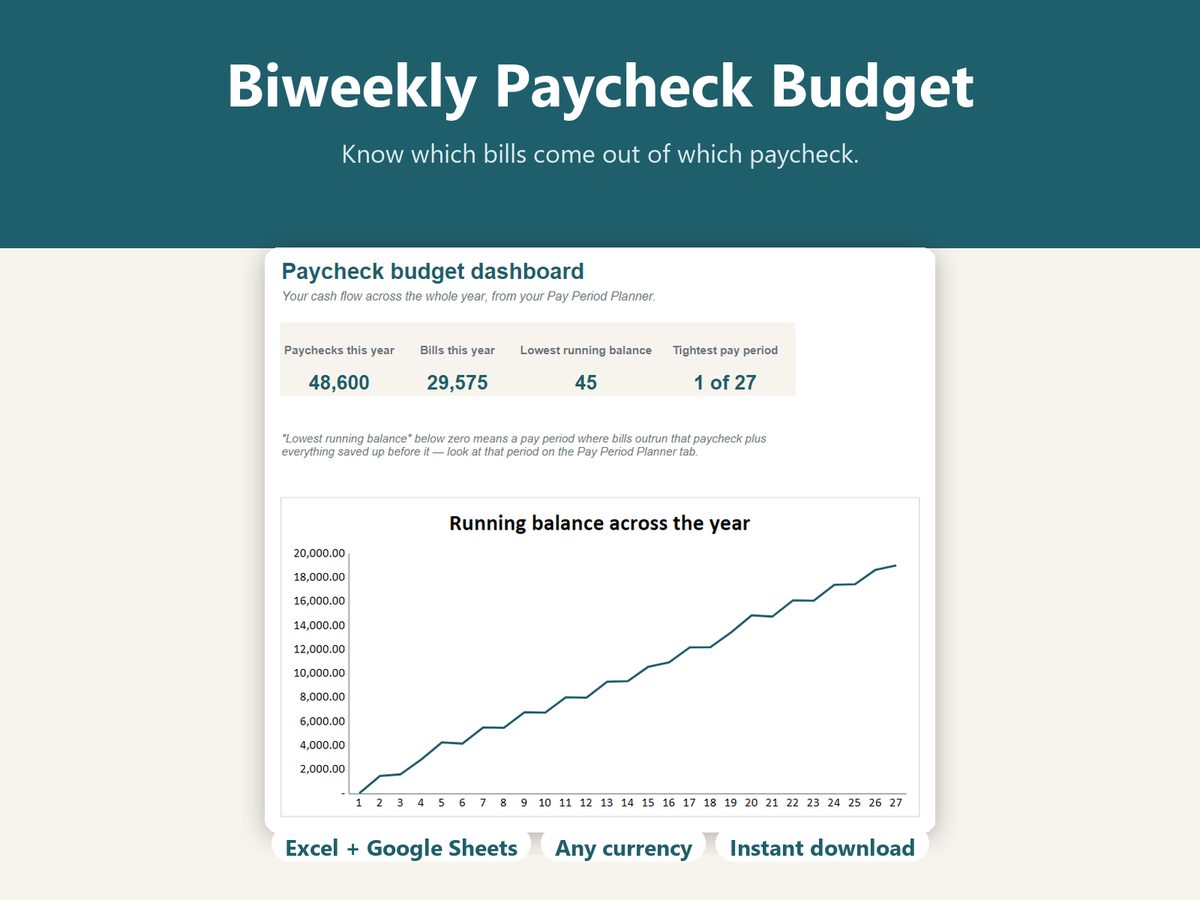
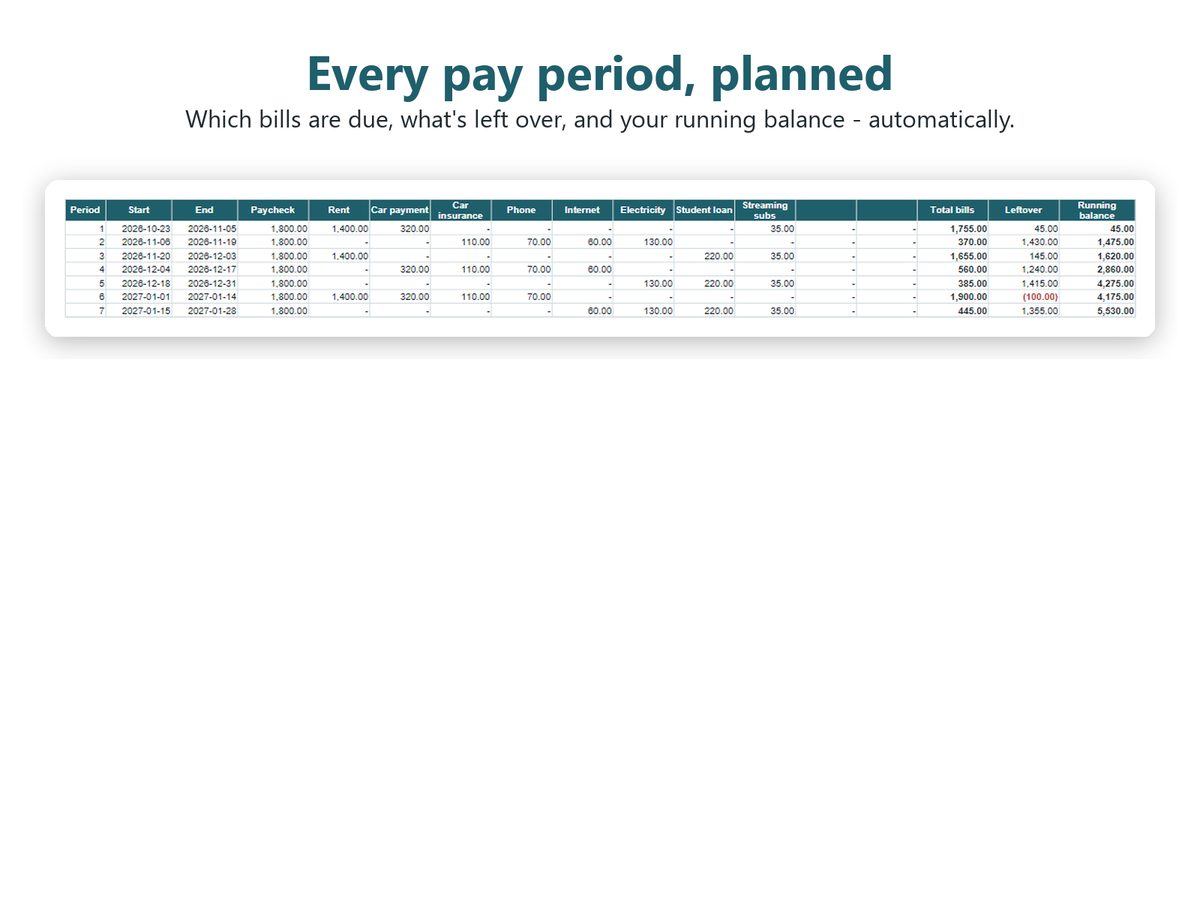
See which bills come out of which paycheck for the whole year, and spot tight pay periods early.
USD 7 one-time Coming soonOr get it with five more in the bundle for USD 19.
Buy and get your download link by email straight away.
Open the .xlsx in Excel, or upload it to Google Drive and open with Google Sheets.
On the Setup tab, enter your first payday, your typical paycheck and each monthly bill with its due day.
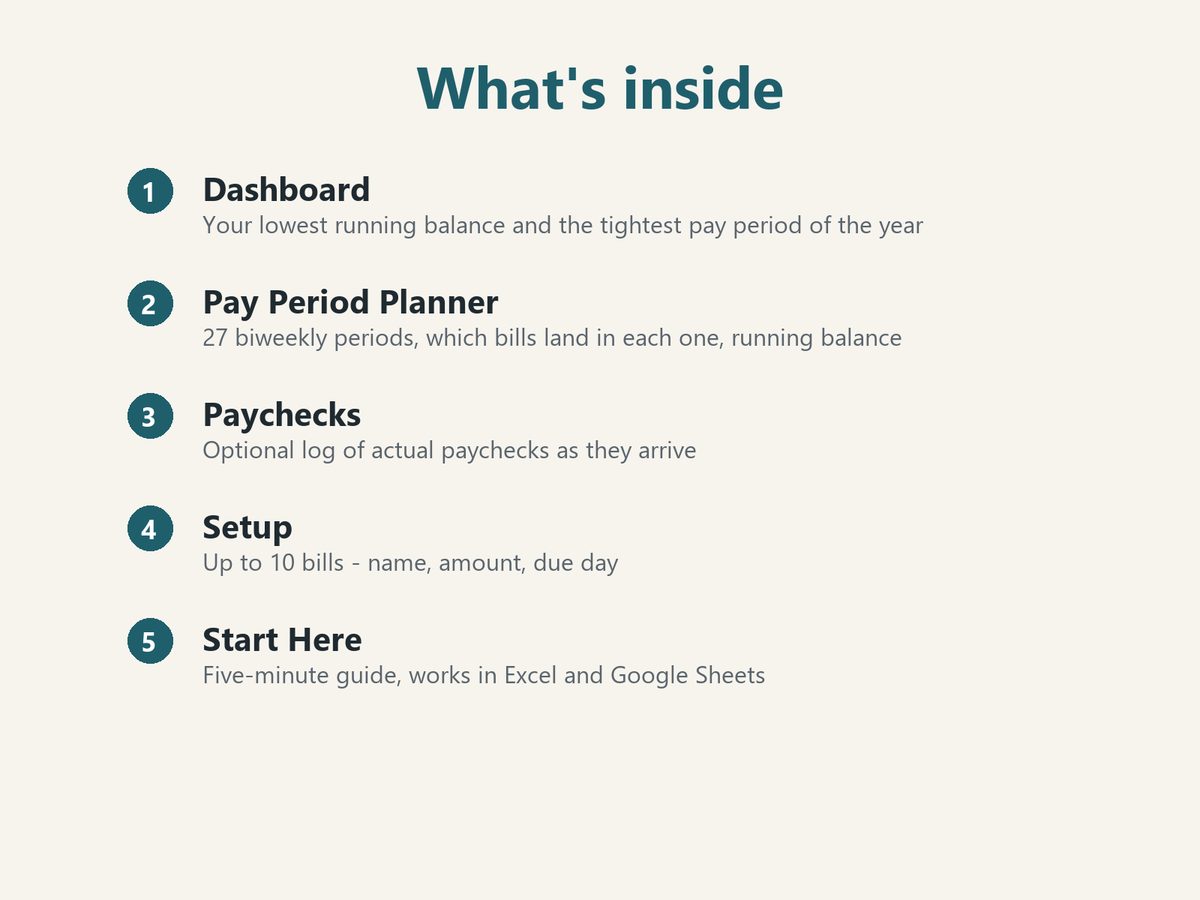
Every biweekly pay period for the year from one start date: the bills due in each one, what's left after bills, and your running balance.
Your lowest running balance for the year and exactly which pay period is tightest.
Log actual paychecks as they arrive and the planner uses them instead of your typical amount.
Up to 10 monthly bills with name, amount and due day. A bill due on the 31st is handled correctly in shorter months.
Works in Microsoft Excel (Windows, Mac, web) and Google Sheets. No macros or add-ons. Use any currency. Example rows are clearly marked so you can delete them.
Reasonably well: treat two weekly paychecks as one pay period and enter their combined amount.
The 27-period planner covers slightly over a year, so any 3-paycheck month on your schedule is included automatically.
Yes. Upload the .xlsx file to Google Drive and choose "Open with Google Sheets". Formulas, dropdowns and charts work. You need a free Google account.
Any. Amounts are plain numbers, so use whatever currency you earn and spend in.
Right after checkout you get a download link by email. Checkout is handled by Lemon Squeezy.
Email me. I'll help you fix it, and if I can't, I'll refund you.
No. It's a planning and tracking tool based on the numbers you enter.
Biweekly Paycheck Budget is one of the six spreadsheets in Money Reset 2027. If more than one part of your money needs attention, the bundle costs less than buying three separately.
Log client payments and expenses, and see how much to set aside for tax each quarter.
Log your accounts once a month and watch your net worth (assets minus debts) trend over time.
